
Why Is It Important to Replace Missing Teeth?
Except for wisdom teeth, it is important to replace missing teeth to ensure optimal health. Your teeth are designed to work together, allowing you to complete everyday functions like eating and speaking comfortably and confidently.
Even a single missing tooth can negatively impact dental health, allowing your remaining teeth to shift position and affecting your bite and appearance. Anyone missing multiple teeth will find eating a comprehensive range of foods difficult. Lack of choice and inability to chew food properly can affect digestion and overall nutrition. This health alignment requires treatment as soon as possible.
Before
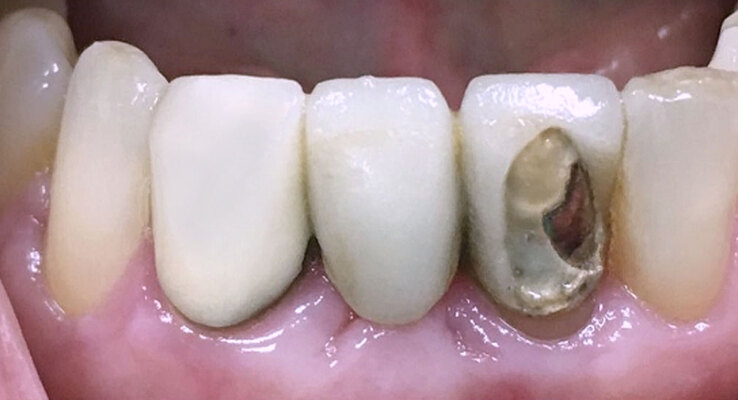
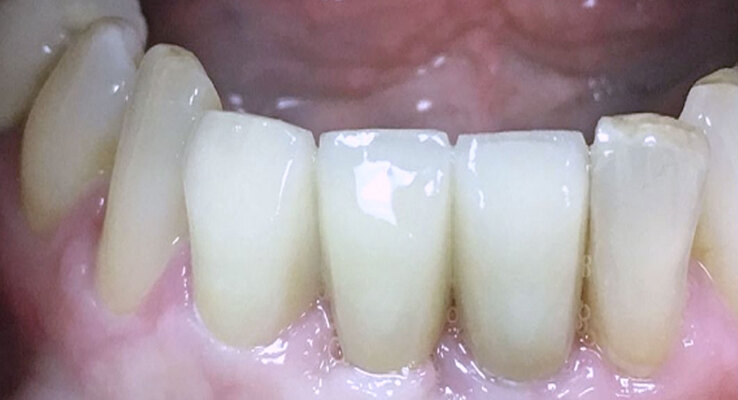
After
What Are the Benefits of Choosing a Dental Bridge?
Benefits of choosing a dental bridge include:
- Protecting your bite
- Preventing existing teeth from shifting out of place
- Restoring your ability to chew food properly
- Restoring your ability to speak clearly
- Restoring your appearance
Before
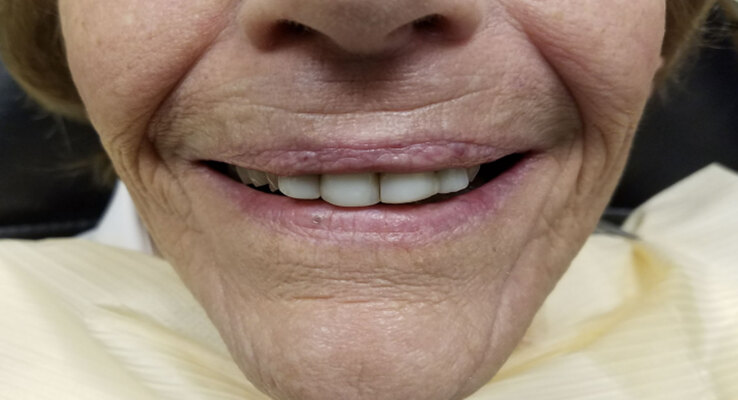
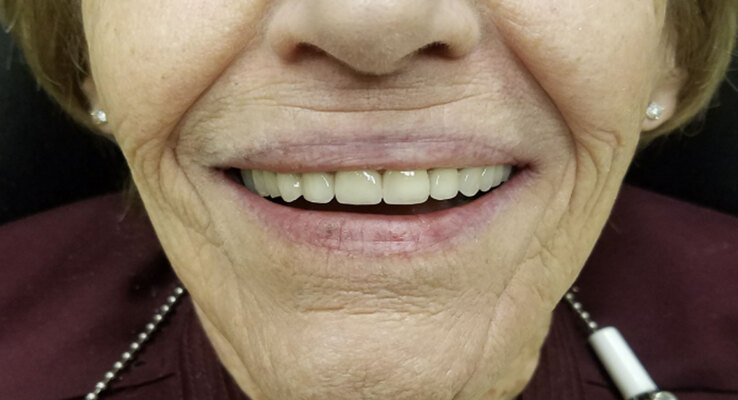
After
What Is a Dental Bridge?
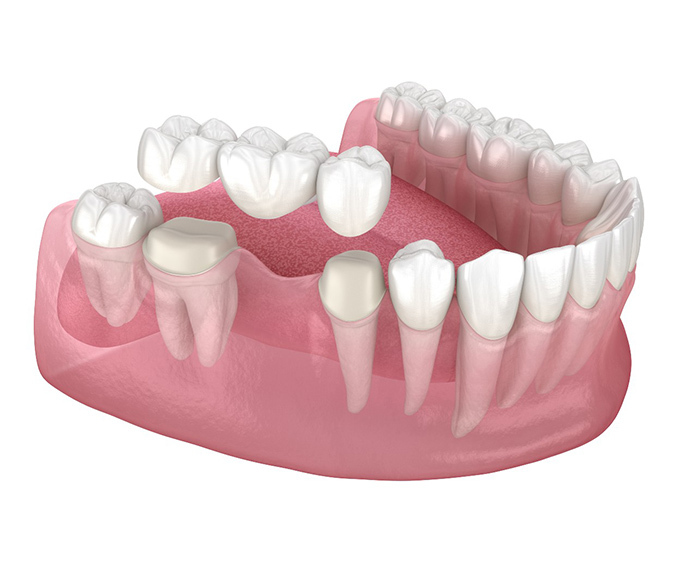
A dental bridge is designed to bridge the gap left by one or more missing teeth originally adjacent to each other.
Natural teeth support the bridge on either side of the gap, called abutment teeth. These teeth are adapted to be crowned, and the crowns are attached to the replacement tooth between them. The crowns are permanently bonded onto the abutment teeth, so a dental bridge is non-removable. The result is a strong, stable restoration that should look and feel good, restoring your appearance and dental health.
Types of Dental Bridges
There are four main types of dental bridges available, such as:
- A traditional bridge which consists of two crowns covering the abutment teeth on either side of the gap and which keep the bridge in place, and a pontic or replacement tooth is fixed between them.
- A cantilever bridge which uses one or two abutment teeth on the same side instead of on either side of the gap. A cantilever bridge can be a good choice for people who do not have teeth strong enough to support a bridge on either side or are missing teeth entirely on one side. However, this option is only suitable in specific cases. It can place the abutment teeth under additional stress and may not be an option when restoring back teeth subjected to substantial chewing pressure.
- A Maryland bridge which is sometimes used to replace front teeth, especially when someone is missing a small lower incisor. The pontic to replace the missing tooth is attached to wings on either side. These wings are bonded onto the inner surfaces of the abutment teeth. Only minor modifications are needed to fit these wings, but a Maryland bridge is relatively fragile, and if it comes under too much pressure can pop off and need re-cementing.
- An implant-supported bridge which is similar to a traditional bridge, but instead, the crowns are fitted over the implant posts inserted directly into the jawbone. It’s an ideal solution when abutment teeth aren’t strong enough to support a bridge or are missing entirely.
What Is the Procedure for a Dental Bridge?
Initially, you will need to see our dentist to discuss your options for replacing missing teeth and determine if a dental bridge is the best choice. If you decide to go ahead, you will need at least two appointments to complete this treatment.
Our dentist will carefully numb the abutment teeth during your first visit before reshaping them, removing part of the enamel and dentin to create enough room for dental crowns. Next, they take a detailed dental impression of your teeth that we send to the dental lab. The lab uses this information to fabricate your permanent bridge. In the meantime, we can provide a temporary bridge to protect your prepared teeth.
On your second visit, we remove your temporary bridge and carefully check the permanent bridge fits exactly, making any necessary adjustments to ensure it is perfect. You will be able to approve its appearance before we permanently bond it in place.
Which Materials Are Used to Make a Dental Bridge?
Various materials can be used to fabricate your bridge, depending on your preference. Options include:
- Precious metal alloys
- Porcelain fused to metal bridges
- Ceramic bridges
When you have a porcelain bridge, we take extensive care to make sure it looks exactly like real teeth, or hopefully even better than the teeth it replaces.
Precious Metal Bridge
If you opt for a precious metal bridge, it will consist of a silver or gold alloy polished to a high sheen. Precious metal is very hard-wearing yet kind to the opposing teeth, but it is visible in the mouth.
Porcelain Fused to Metal Bridge
A porcelain fused to metal bridge is a popular choice consisting of a thin metal alloy substructure covered with lifelike porcelain. The result is an attractive and hard-wearing bridge suitable for anywhere in the mouth but is especially good when restoring back teeth just beyond your smile line.
Success Stories
Entire experience absolutely phenomenal
I cannot stress how strongly I recommend this practice! Dr. Russo and his staff make the entire experience absolutely phenomenal, from the initial consultation all the way through the installation of my dental bridge. He pays close attention to all of your concerns, something that is very rare in dentists these days!
All-Ceramic Bridge
There are two types of all-ceramic bridges:
- eMax bridge. This material can create extremely beautiful bridges that are excellent when restoring front teeth. However, the material tends to be best used for a shorter span bridge and is less suitable when restoring back teeth that come under more substantial pressure as you chew food.
- Zirconia bridge. Zirconia is an extremely strong material that is virtually unbreakable yet is gentle to opposing teeth and will not wear or damage them. A bridge can be made from pure zirconia pre-shaded and finished to look and feel natural. Sometimes the zirconia is covered with a special ceramic material and provides wonderful aesthetics.
Zirconia bridges are suitable for anywhere in the mouth and are strong enough to replace multiple missing teeth and even complete arches. There are various types of zirconia available, including Bruxzir, which is suitable for people who clench and grind their teeth, a problem called bruxism. Normally bruxism would break or damage porcelain bridges.

Dr. Adam Shoukry, DDS, is a cosmetic dentist who strives to provide each of his patients with personalized care and educate them on the state of their dental health so that they can make informed decisions. Dr. Shoukry really enjoys his work and is committed to continued education, having attended several accredited courses in every aspect of dentistry.
Dr. Shoukry graduated from NYU College of Dentistry with a Doctor of Dental Surgery degree and then completed his general practice residency at Nassau University Medical Center. Being a member of the American Dental Association, the Academy of General Dentistry, and the American Academy of Cosmetic Dentistry, Dr. Shoukry strives to provide comprehensive dental examinations, a full range of cosmetic treatments, and the best restorative oral health care available.