
What Are Dental Veneers?
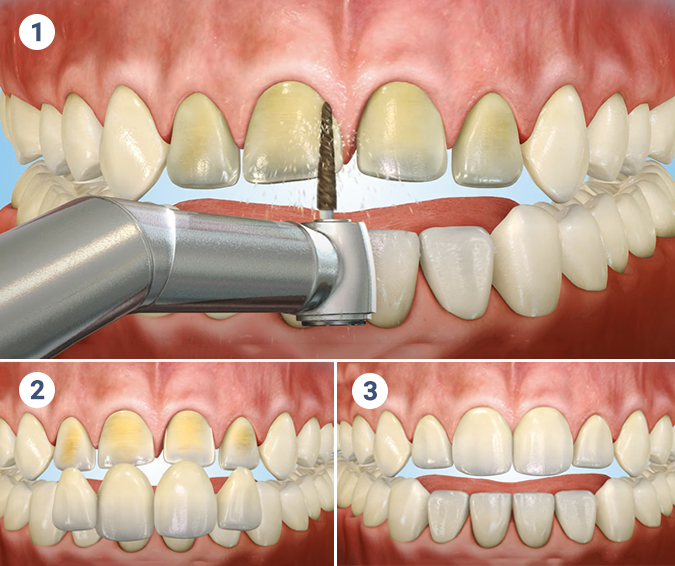
Imagine a false fingernail that hides a broken or chipped, or stained fingernail underneath. Dental veneers work similarly and consist of a very thin shell of material that covers the front surface of a tooth and its biting or incisal edge and can wrap around the edges of a tooth. The back portion of the tooth nearest to the tongue remains uncovered. It is important to note that a dental veneer does not cover the entire tooth. When a restoration completely covers a tooth, it is called a crown or cap, not a veneer.
Dental veneers can be made from composite resin or porcelain. Composite resin veneers can be placed directly onto teeth, and the process is completed chairside. Porcelain veneers are indirect restorations, so they are made outside the mouth. The composite resin used to make veneers is hard-wearing and durable but can become stained over time. In comparison, porcelain veneers can cost a bit more but are longer lasting, and porcelain will not stain.
When to Consider Veneers?
There are several pros to choosing dental veneers, including:
Brighten Your Smile Easily
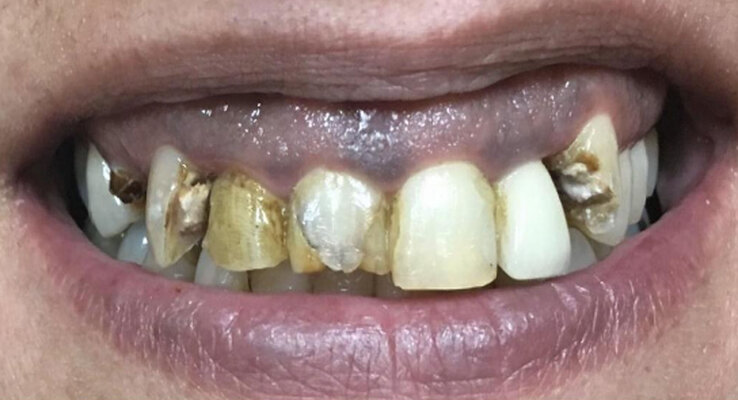
Many people investigate dental veneers because their teeth are stained, perhaps after years of smoking, eating, and drinking highly pigmented foods and beverages, or where teeth are stained internally and will not respond to teeth whitening treatments. Unlike teeth whitening treatments, where teeth gradually become discolored, dental veneers offer a more permanent way to whiten your smile, especially if you opt for porcelain veneers that will not stain during the lifetime of the restoration. You can trust your smile will look good for years to come, especially if you see your cosmetic or family dentist regularly for checkups and dental cleanings.
Fix Minor Cosmetic Problems
Very few teeth are absolutely perfect, especially as we get older. Teeth can become chipped or cracked, or worn down. Some teeth have unsightly gaps between them that can trap food or create dark areas in a smile that looks less than attractive. Teeth may be less than perfectly aligned, but the problem isn’t quite severe enough to require orthodontic treatment to reposition them. Sometimes teeth are not quite the right shape or size. Dental veneers can help to fix all these problems. Although they cannot change the tooth’s position, they can correct problems with minor misalignments and help close or minimize unsightly spaces between teeth.
Hide Damaged Tooth Enamel
Tooth enamel is one of the strongest substances in the human body, but it is not indestructible and can be harmed if you brush your teeth using a hard-bristled toothbrush or overbrush them. Tooth enamel can also become worn if you have a very acidic diet or eat a lot of sugary foods.
The sugars left coating your teeth are used as an energy source by bacteria naturally present in your mouth, and these bacteria produce acid that erodes tooth enamel. Although your dentist can provide professional fluoride treatments to help re-harden tooth enamel, your enamel will not grow back. Dental veneers can be an excellent replacement with the added advantage that they will help perfect your smile.
Before
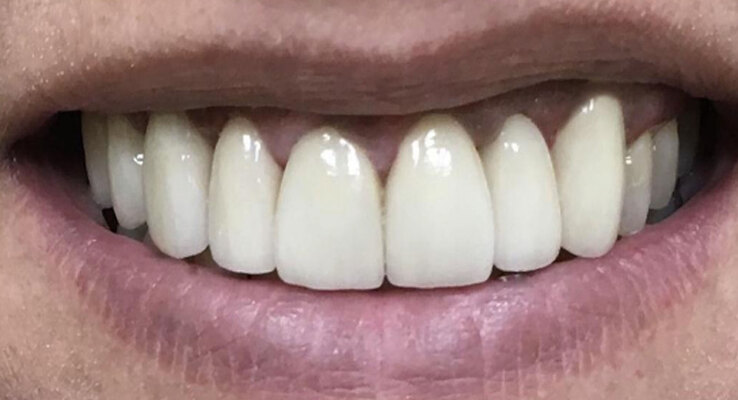
After
Who Can Have Veneers?
Not everybody is suitable to have dental veneers as you need generally strong and healthy teeth. Your teeth shouldn’t have any large cavity fillings or areas of decay or any signs of infection, and the gum around your teeth should also be healthy and strong. The only way to find out for sure is to schedule an appointment with a good cosmetic dentist. They can assess your dental health thoroughly to make sure treatment is appropriate, and if necessary, can treat other dental problems like gum disease beforehand.
If your cosmetic dentist determines veneers aren’t the right choice for you, it could be because your teeth are too significantly infected or broken down and have lost too much of their original structure. In this case, you may be better off having porcelain crowns that cover the entire tooth, replacing missing structure and restoring strength and appearance to the tooth.
How Many Veneers Do I Need?
The number of veneers required is largely down to personal choice. Some people choose to veneer all the teeth visible within their smile line, while others prefer to veneer just one or two teeth to help improve their appearance. We often combine this treatment with other dental procedures, such as teeth whitening.
For example, we can professionally whiten your teeth before selectively veneering those teeth that most require it, perhaps because they won’t respond to teeth whitening treatments or are slightly cracked or chipped.
Combining treatments can often provide a more conservative approach to cosmetic dentistry. This approach may prove more cost-effective, but it might not necessarily give you a cosmetically perfect smile that can be achieved by veneering all the teeth visible in your smile line.
The Benefits of Dental Veneers
The advantages of dental veneers extend beyond your improved appearance. Other positives include:
- Durability. If you’re careful and follow your dentist’s instructions, your veneers may last more than 20 years. If a veneer chips due to negligence or an accident, it can’t be fixed, but instead must be replaced.
- Quick results. Other dental procedures may take months or years to correct crooked or misaligned teeth. Veneers improve your appearance quickly and painlessly.
- Resistant to stains. Unlike normal tooth enamel that yellows with age and food or drink consumption, veneers have been designed to consistently resist stains and retain their original color for the length of their functional lives.
- Realistic appearance. Custom-made and designed to accurately mimic teeth, the optical qualities of veneers appear natural and realistic.
- No special care. Their precise fit and natural-looking material make veneers low maintenance. No special care is needed. Continue to brush and floss as you did for your natural teeth and maintain your regular dental visits.
Will My Veneers Look Natural?
We have extensive experience in designing and fitting porcelain veneers. When designing these restorations, we take tremendous care to make sure they complement each patient’s personality, facial structure, and skin tone, providing them with teeth that look naturally white, healthy, and attractive.
What to Expect After Having Dental Veneers?
Initially, your teeth may feel slightly more sensitive until they settle down. These feelings should only last a day or two. Your new veneers should feel comfortable and natural so that you can talk, smile, and eat confidently.
Because we need to remove a small amount of tooth structure, dental veneers are irreversible, but they should last ten years or longer with the proper care.
Treat Your Veneers Gently as If They Are Natural Teeth
While your veneers are made from strong, durable, and stain-resistant porcelain, they shouldn’t be used to open packets or as tools as this could break or chip them. Generally, if a habit could damage your natural teeth, it will almost certainly damage veneers, and avoiding these habits will help prolong the life of your restorations, ensuring your smile looks fabulous for longer.

Dr. Adam Shoukry, DDS, is a cosmetic dentist who strives to provide each of his patients with personalized care and educate them on the state of their dental health so that they can make informed decisions. Dr. Shoukry really enjoys his work and is committed to continued education, having attended several accredited courses in every aspect of dentistry.
Dr. Shoukry graduated from NYU College of Dentistry with a Doctor of Dental Surgery degree and then completed his general practice residency at Nassau University Medical Center. Being a member of the American Dental Association, the Academy of General Dentistry, and the American Academy of Cosmetic Dentistry, Dr. Shoukry strives to provide comprehensive dental examinations, a full range of cosmetic treatments, and the best restorative oral health care available.